
For decades, Africa has argued—often correctly—that it is underrepresented in the leadership of global institutions. Yet when moments arise to convert that argument into influence, the continent has too often fractured, advancing multiple candidates, weakening its leverage and ultimately surrendering the final decision to others.
The selection of the next Secretary-General of the United Nations presents another such moment—one that will not be decided by eloquence at the General Assembly, but through a tightly controlled process shaped by the United Nations Security Council. In that arena, disunity is not a neutral condition. It is a veto by other means.
Africa now stands at a familiar crossroads, but under less forgiving conditions. It has gained greater access to global platforms, but access has exposed a deeper weakness: the absence of sustained coordination. The continent's recent admission into the G20 was a milestone, but it also revealed an uncomfortable truth—representation without coherence risks becoming ceremonial. A seat at the table, unaccompanied by a unified position and disciplined follow-through, produces presence without power.
The contest for Secretary-General raises that same question at a higher level. A candidate without a continent behind him is symbolic. A continent without a strategy is irrelevant.
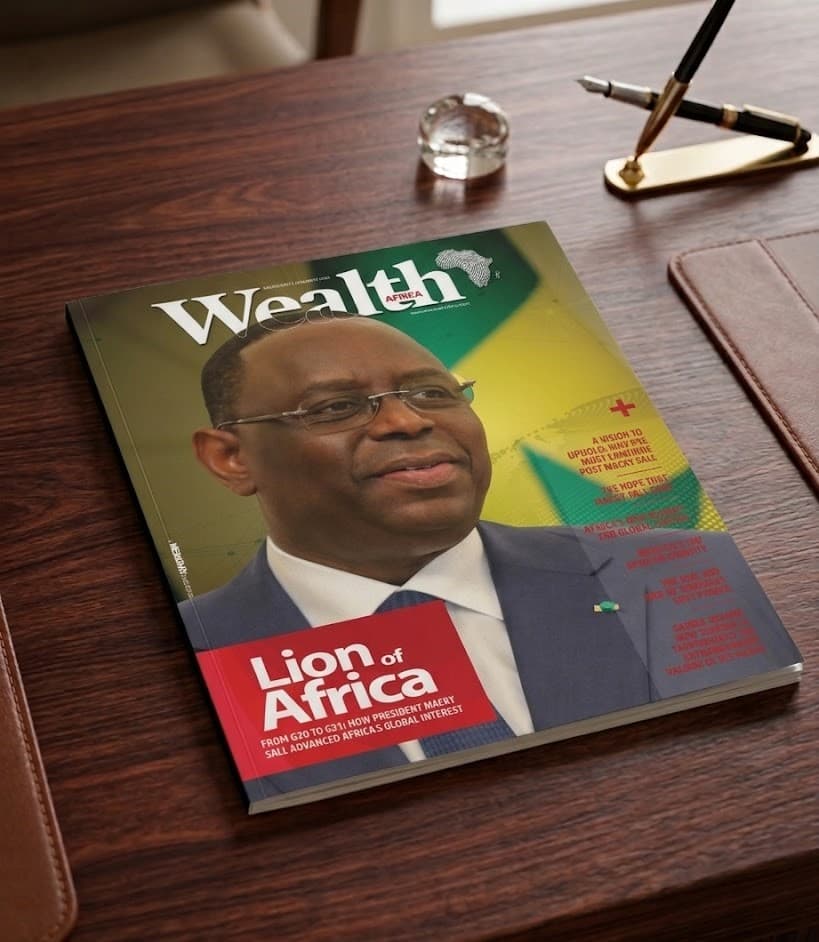
It is within this context that the candidacy of Macky Sall must be assessed.
The Sall Profile
Sall is not merely another African name in circulation. His emergence is tied to a period in which Africa's voice in global affairs became more structured, more assertive and, crucially, more intelligible to the rest of the world. As Chair of the African Union, he did not simply echo long-standing grievances; he reframed them into concrete demands around financial reform, energy equity and institutional representation. He brought a level of clarity and persistence that shifted Africa's posture from appeal to argument.
His advocacy for Africa's inclusion in the G20 did not occur in isolation. It was part of a broader effort to reposition the continent within global economic governance, linking questions of debt vulnerability, climate financing and systemic bias in international financial institutions into a coherent narrative that external partners could neither ignore nor easily dismiss. That effort mattered—not because it single-handedly altered global structures, but because it demonstrated something Africa has too rarely shown: continuity of purpose backed by diplomatic discipline.
Equally significant is the manner in which Sall, as Senegal's president, engaged the world on Africa's behalf. He avoided the rhetorical extremes that often limit African influence—neither confrontational to the point of alienation nor deferential to the point of irrelevance. Instead, he operated within the narrow but critical space where global acceptability is built. In a process where the approval of competing powers is decisive, this balance is not cosmetic; it is foundational.
None of this places him beyond scrutiny. His domestic political record, for instance, is under serious contestation, which is likely a part of the assessment that serious actors—within and outside Africa—will inevitably make.
The Strategic Calculation
But the Secretary-General selection process is not an academic exercise in identifying the most decorated résumé. It is a geopolitical negotiation constrained by acceptability. Candidates do not fail primarily because they lack competence; they fail because they cannot consolidate support—either within their region or across the power centres that ultimately determine the outcome.
This is where the African calculation must become more disciplined.
In that arena, disunity is not a neutral condition. It is a veto by other means. The Security Council process that will determine the next Secretary-General is not decided by eloquence at the General Assembly — it is shaped by coordinated lobbying, early signal-testing, and the quiet arithmetic of permanent member support.
The question is not whether there are other capable candidates. There are. The question is whether Africa is prepared, early enough, to align behind a candidate who is broadly acceptable across its internal divisions and externally viable within a system it does not control. Delay, fragmentation and parallel ambitions will not produce a compromise candidate. They will produce an outcome decided elsewhere.
Africa has seen this pattern before. Across multiple global contests, the continent's inability to coalesce has repeatedly diluted its influence. Competing endorsements, quiet rivalries and late-stage alignments have ensured that African candidates enter decisive phases weakened, allowing external actors to shape the result with minimal resistance.
To repeat that pattern in this instance would not simply be another missed opportunity. It would reinforce a deeper perception—that Africa, despite its scale and growing relevance, remains unable to act with strategic coherence when it matters most.
A Narrow Window
There is, however, a narrow window to do otherwise.
The process that will produce the next Secretary-General is already taking shape beneath the surface, through informal consultations and early signal testing. By the time formal positions are declared, much of the real negotiation will have been settled. Africa's influence, therefore, will depend not on last-minute declarations of unity, but on early, deliberate alignment.
In that context, Sall's candidacy presents something that is both rare and practical: a potential point of convergence. He combines prior continental visibility with a diplomatic profile that is unlikely to trigger immediate resistance from key external actors. He is known, he is tested within multilateral settings, and he occupies a pragmatic centre that makes broad support possible without requiring ideological agreement.
The deeper issue is not the individual. It is whether the continent is prepared to approach this moment with the seriousness it demands. That means moving beyond symbolic gestures, investing in coordinated diplomacy and recognising that global influence is not granted; it is organised.
Africa has argued for a place at the table. It has begun to secure that place. The question now is whether it can demonstrate the discipline required to shape what happens at that table.
The candidacy of Macky Sall is, in that sense, a test—but not of one man. It is a test of whether Africa can, when presented with a viable option, resist the familiar pull of fragmentation and act with the unity that its ambitions require.
If it can, the outcome may, for once, reflect its weight.
If it cannot, the decision will be made—as it often has been—without it.